Small Island Developing States Should Be More Actively Engaged in AI Governance
23rd June 2026
Nassau, THE BAHAMAS – Visiting professors from universities in China shared their insights with UB faculty and students recently on two important topics: AI Governance and the Role of the UN and its Specialized Agencies during a lecture held in the auditorium of the Harry C. Moore Library and Information Centre.
Executive Dean of the School of Global Governance at Beijing Institute of Technology (BIT) and Chief Technical Advisor of UNIDO Professor Hao Liu shared that perhaps the most important lens through which to view AI is as Augmented Intelligence, a view that many hold. He also proposed a people-focused framework for AI governance and adoption focusing on Human. Infrastructure. Data. Algorithm. Application (HIDDA).
Professor Hao conceded that global consensus is difficult to achieve in emerging science and technology governance and that non-binding norms and guidelines are the effective governance approaches to take.
“Non-governmental platforms play and increasingly important role as new international organizations, platforms and forums continue to emerge,” he noted. “Continuous engagement of academic and industry is critical across the entire governance life cycle.”
Professor Hao added that Small Island Developing States (SIDS) matter deeply to the future of AI and that their voices, needs and contributions should be more actively included in global AI development and governance.
Zhou Gengsheng Chair at Wuhan University and former Director of the Legal Affairs and External Relations Bureau at the International Civil Aviation Organization (ICAO) Professor Huang Jifang delivered a lecture on the functions of the UN and its major bodies. He also addressed the need for AI regulation globally.
“Who should regulate AI? Don’t forget one thing AI is crossing the border. It is almost not possible to limit AI into state boundaries so you need a global structure to deal with that….and smaller countries are quite important,” he noted.
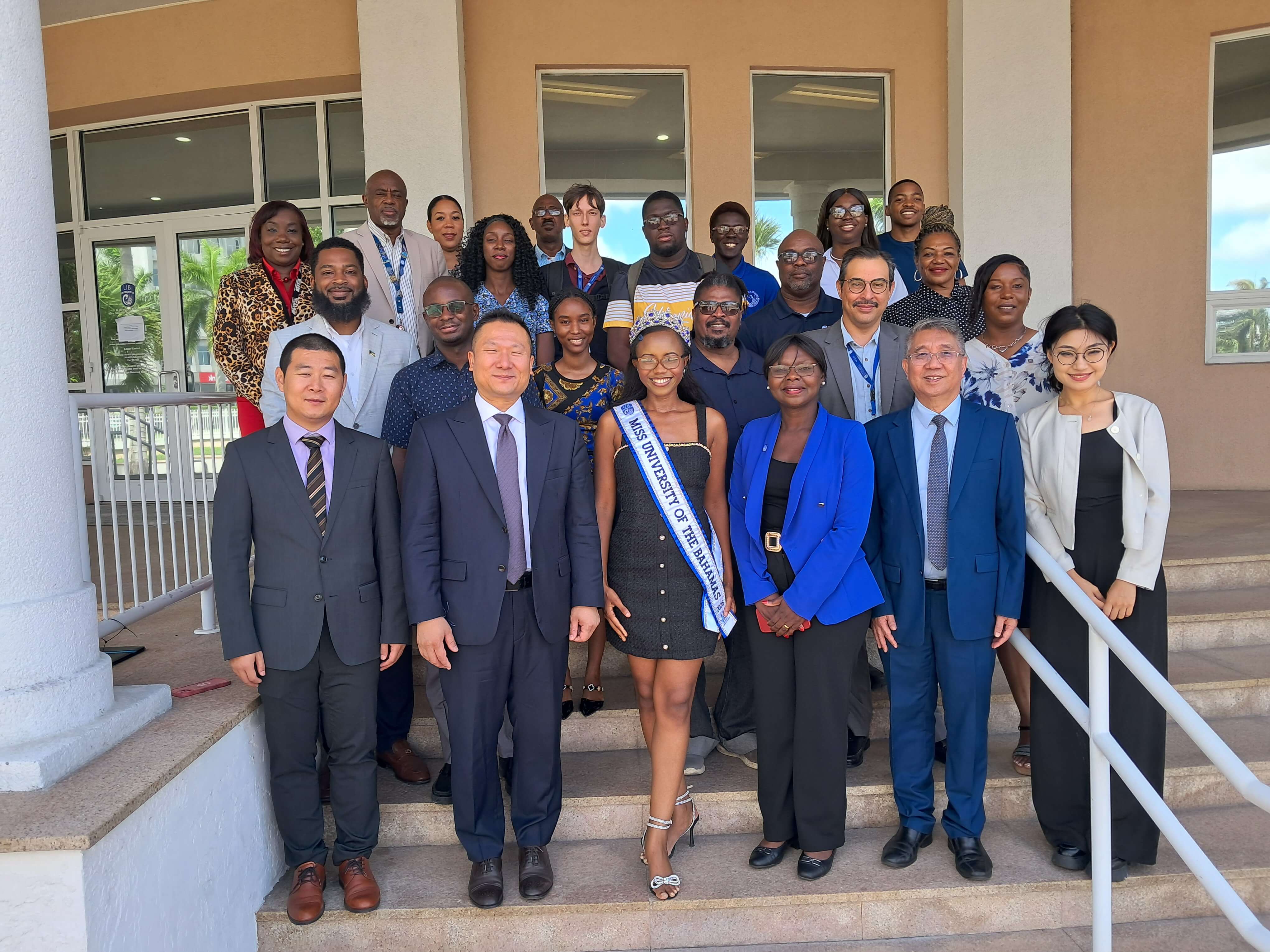
During the visit, facilitated by UB’s Department of Global Studies and Programmes, the visiting lecturers, accompanied by officials of the Embassy of the People’s Republic of China in Nassau, also paid a courtesy call on UB President Dr Robert Blaine, III and toured the Oakes Field Campus.
-
- Group photo with the visiting delegation and UB officials.
-
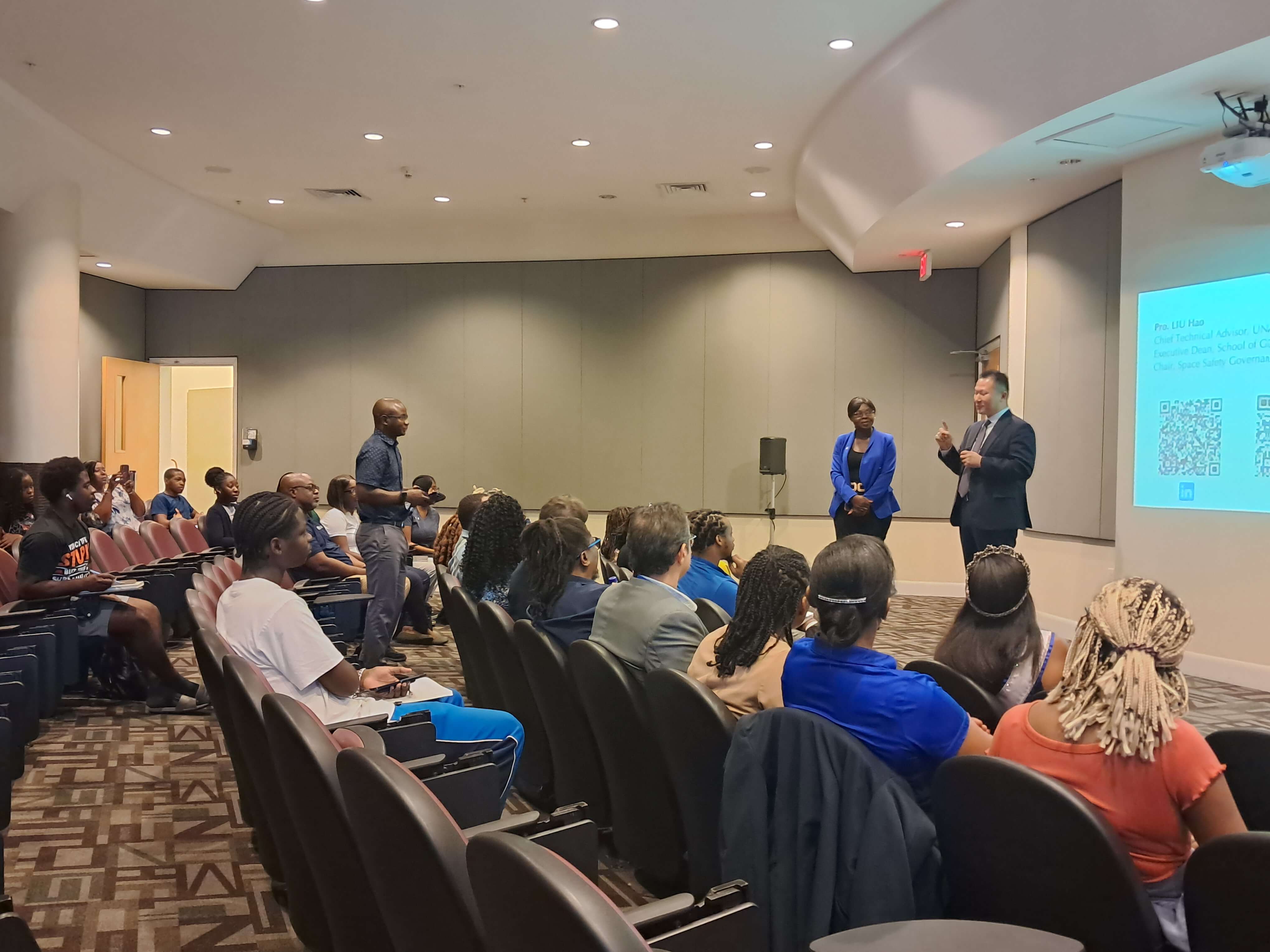
- Executive Dean of the School of Global Governance at Beijing Institute of Technology (BIT) and Chief Technical Advisor of UNIDO Professor Hao Liu delivers his lecture.
-
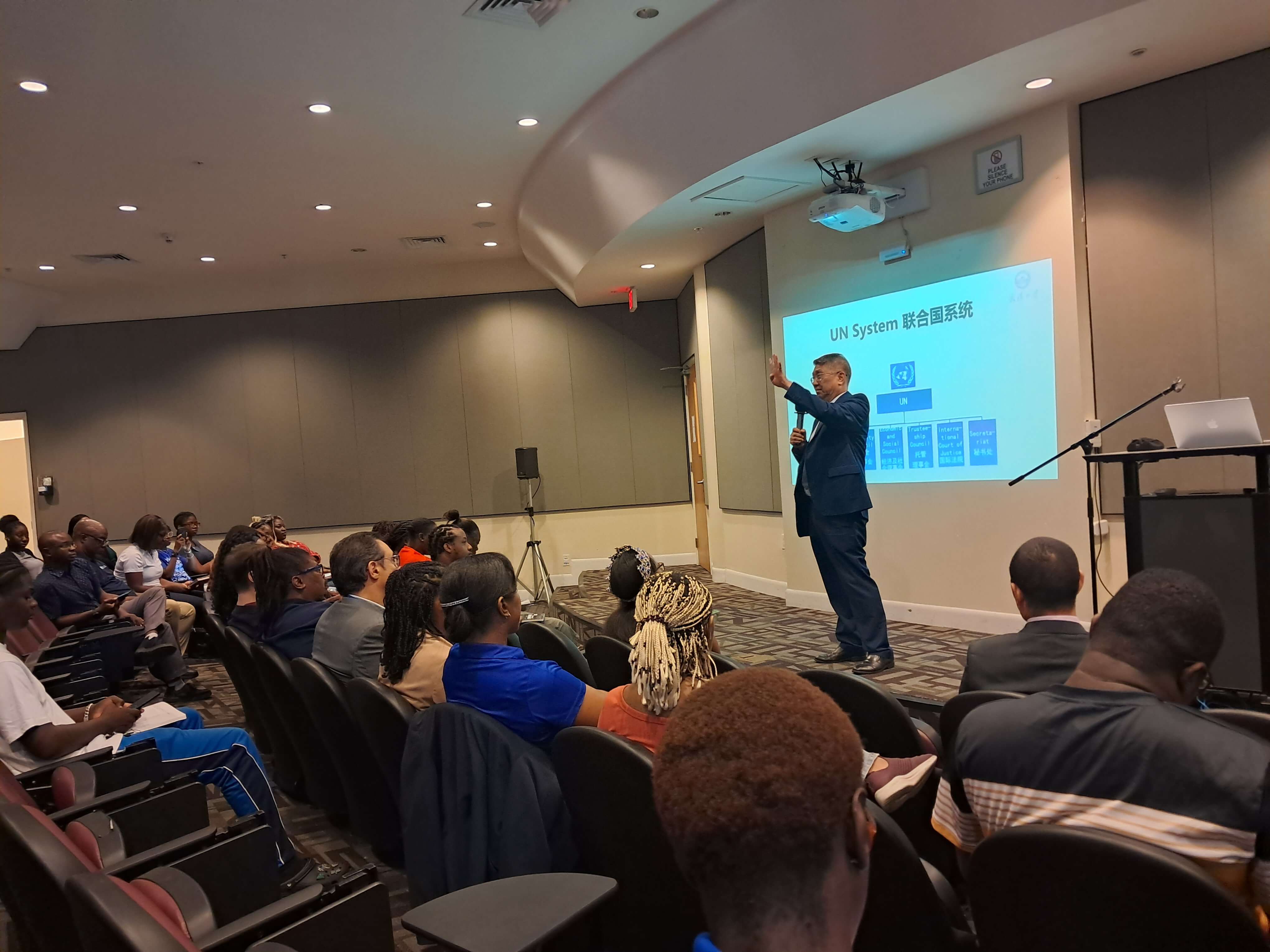
- Zhou Gengsheng Chair at Wuhan University and former Director of the Legal Affairs and External Relations Bureau at the International Civil Aviation Organization (ICAO) Professor Huang Jifang delivers his lecture.