From Standards to Strength: A Framework for Sustainable Success
9th July 2026
I remember standing before the musicians of the Jackson State University Chamber Orchestra as the conductor in Washington, D.C., in January 2009. It was just moments before we began one of our performances for the inauguration of President-elect Barack Obama. You could feel the history, the expectation, the pride.
I still see their eager faces; talented, yes, but more importantly, prepared to perform at their best. They had rehearsed, refined, and committed themselves to a standard that allowed them to rise to that extraordinary occasion.
As I lifted the baton, I understood that moments of significance do not leave room for guesswork. Excellence must already be in place. Standards must have already been met. That lesson has stayed with me and is a poignant reminder now in my role as President of University of The Bahamas (UB).
A university operates under the same principle. We are preparing students not just for the ordinary, but for extraordinary opportunities anywhere in the world; moments when they must perform, lead, adapt, and contribute at the highest levels. This responsibility guides not only what we do at UB, but the quality and sustainability of our work. The University is in a new era of excellence and accountability for the benefit of our students and the nation we serve. We are implementing a framework to strengthen our core operations and support systems to drive student success that endures.
At its core, a university education is about trust. That trust is enshrined in the UB mission: to advance and expand access to higher education, promote academic freedom, drive national development and build character through teaching, learning, research, scholarship and service.
Our response to that trust is a commitment to our students, their families, and the nation that when a young person walks through our doors, they will receive an education that is rigorous, that when working professionals become members of our academic community, they will benefit from an education that is relevant and recognized anywhere in the world. It is our promise that we will meet the standards of educational quality, in every respect, because each person’s dream matters. This resonated deeply when we conferred some 500 graduates with their degrees, diplomas and certificates recently and they joined the ranks of UB’s more than 23,000 alumni.
The Organisation for Economic Cooperation and Development’s Education at a Glance 2025[1] report has made it clear that supporting equitable access to tertiary education is the key to improving social and economic mobility, since educational achievement strongly influences success in the job market. The report on the state of education worldwide noted that simply expanding educational opportunities is not enough. Education systems must also ensure that learners develop the skills they need to flourish – from technical competencies and theoretical knowledge to character development and emotional intelligence.
This is the essence of UB is as an academic community, and we are even more excited about it as a candidate for accreditation with the Southern Association of Colleges and Schools Commission on Colleges (SACSCOC) working towards full accreditation. UB is also pursuing accreditation with the National Accreditation and Equivalency Council of The Bahamas.
UB is delivering knowledge for a dynamic world, fostering cutting-edge skills, and giving imagination and innovation an environment to grow. The seed for this was planted more than 50 years ago. Today, we continue to build on a strong foundation, developed through the hard work of many people across the length and breadth of academia and the nation.
Accreditation is not the destination. It is a daily walk of continuous improvement; a community aspiring to the highest standards that benefit our students, faculty, staff, and the country at large. Student success-focused excellence is our north star.
In Fall 2025, our total student enrolment grew to 5,020 in New Providence and Grand Bahama, the second-highest enrollment in our history. Among them, 76% are enrolled on a full-time basis and an increasing number, 35%, are first-generation university students. This growth reflects something important: a belief in the power of higher learning, to bring about transformation.
For parents sending their first child off to university, accreditation is reassurance that says every dollar saved, every prayer whispered, will not be in vain. For a high school graduate stepping into adulthood, it is a quiet guarantee that their education will open doors, not close them.
We are preparing what the writer and thinker David Epstein has described as “intellectual chameleons”[2]: individuals who can pivot, learn, and thrive in a world defined by constant change. In his work, he reminds us that the future does not belong solely to specialists, but to those who can connect ideas across fields, think critically, and adapt when circumstances demand it.
This is precisely the kind of graduate The Bahamas needs.
Who, then, is the UB graduate? What does that graduate look like in the 21st century? What are the thinking skills we expect every student to carry with them, not just into their first job, but into a lifetime of change? What sense of civic responsibility must be embedded so deeply that it shapes not only what they achieve, but how they serve? And what intellectual traits will allow them to navigate a world where they will change careers two, three, even four times over the course of their lives?
This is the graduate we are called to produce. We have begun to have these and other crucial conversations as we prepare for the UB Strategic Plan 2026-2031. In this process, we are actively engaging not only our faculty, staff, students and administrators, but our alumni, other stakeholders and members of the public. Your feedback and perspectives are integral to responding to these questions and determining the roadmap for UB’s future.
In a world where knowledge is the currency of progress, we simply cannot afford to fall behind.
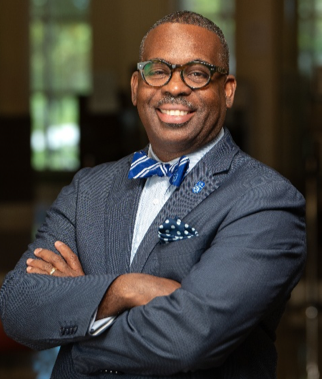
Robert J. Blaine, III, DMA
President, University of The Bahamas
1 Organisation for Economic Co-operation and Development. Education at a Glance 2025: OECD Indicators. OECD Publishing, 2025.
[2] Epstein, David. Range: Why Generalists Triumph in a Specialized World. Riverhead Books, 2019.