Economic and Financial Experts Assess US-China Relations; Offer Advice for The Bahamas
5th March 2026
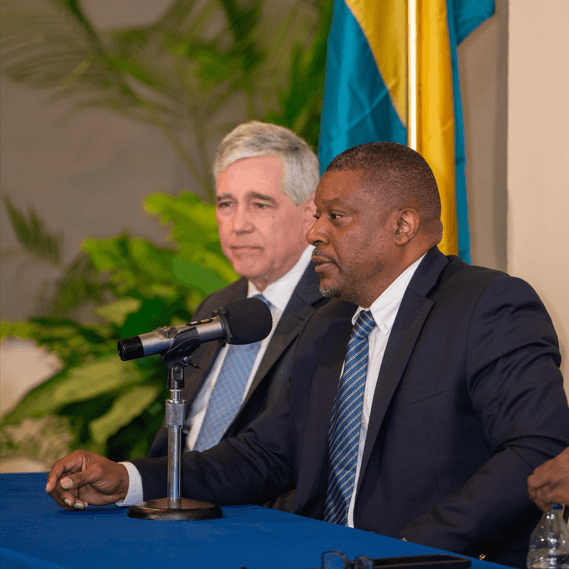
Nassau, The Bahamas — The People’s Republic of China, in the span of two decades, has transformed itself into an economic superpower the world can scarcely function without. This was one of the perspectives that added context to crucial conversations about the US-China outlook at the Central Banking Summit held at University of The Bahamas (UB) on Tuesday.
“China has gone from being, conceptually, a non-economy. It has gone from being a $2 trillion economy in 2000; today it is a $20 trillion economy. There has never been growth like that anywhere on the planet,” said Michael Drury, chief economist, McVean Trading.
In the Caribbean region and for The Bahamas, China has become both a critical link in the global supply chain and, at times, a financial partner when the price tag of major infrastructure projects proves difficult to carry alone.
During the summit, facilitated by UB’s Government and Public Policy Institute (GPPI) in partnership with the Global Interdependence Center (GIC), the outlook on US-China relations and how the world will be impacted was a key topic of discussion.
Drury appeared on a panel with Zhivargo Laing, Executive Director of UB’s GPPI. Both gave insight into China’s rapid economic rise and its growing influence over global manufacturing and trade.
“The wish was that China would become a capitalist democracy, and it was on its way there until President Xi Jinping took control of the country in 2012. [Xi] is a Marxist. When you are a Marxist, you believe capitalism will destroy itself,” Drury explained.
Drury, who also serves as an executive and assistant program director with the GlC, noted that the statistics surrounding China’s meteoric manufacturing expansion often evoke strong reactions when presented to audiences across the US.
“The solution for the United States in freeing itself from China’s manufacturing dominance is to find somewhere it can produce goods without depending on China. There is no such place on earth. China produces 30 percent of all manufactured goods,” he said.
The discussion also examined recent efforts by the US to reclaim manufacturing capacity and reverse trends Washington believes could compromise national security.
“The spoken goal of wanting to return manufacturing to the United States essentially means restoring enough production capacity to support national defence,” Drury explained. “The auto industry built the bombers and tanks during World War II. If you don’t have an auto industry, you don’t have an industry you can flip into national defence production.”
For The Bahamas, the geopolitical dynamics has become increasingly challenging to navigate with the latest example being the proposed specialty hospital project for which the Government of The Bahamas has secured Chinese financial backing. In response, the US, through its newly appointed ambassador, has publicly encouraged The Bahamas to reconsider the arrangement.
Laing, former Minister of Economic Affairs and a UB graduate, offered this contextual view: that The Bahamas understands the importance of maintaining strong relationships with both global powers.
“If we were going to have concerns about any country being overly influential in The Bahamas, it would be the United States of America. Why? Eighty-plus percent of our tourism comes from the United States. We have one of the only U.S. pre-clearance facilities in the world. There are substantial American investments in The Bahamas. Our currency is pegged to the United States. And if we ever needed help in this country, we have no doubt who we would turn to,” Laing said.
Laing noted that the influence of the United States extends beyond economics and geopolitics into the cultural and personal realms.
“We love to go to the United States. We go for education, healthcare, and socializing. But for practical reasons, we also nurture relationships with countries around the world. The Bahamas is not a war state.”
As competition between the two global giants intensifies, Laing offered this advice for policymakers navigating the geopolitical landscape.
“It will continue to be very competitive between these two giants, and if I were advising policymakers in The Bahamas, I would say: keep hugging your friends and shaking the hands of your associates.”
-
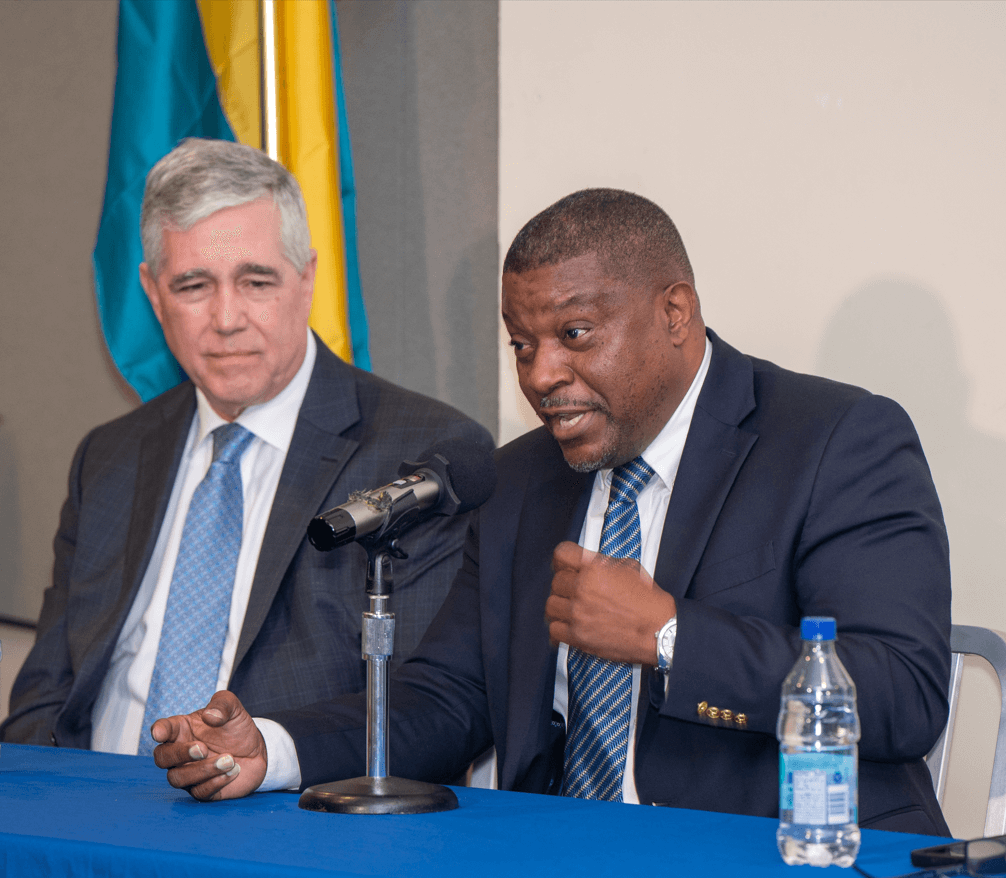
- Executive Director of the Government and Public Policy Institute at University of The Bahamas Zhivargo Laing analyzes the US-China relations and the impact on The Bahamas at the Central Banking Summit held at University of The Bahamas.
-
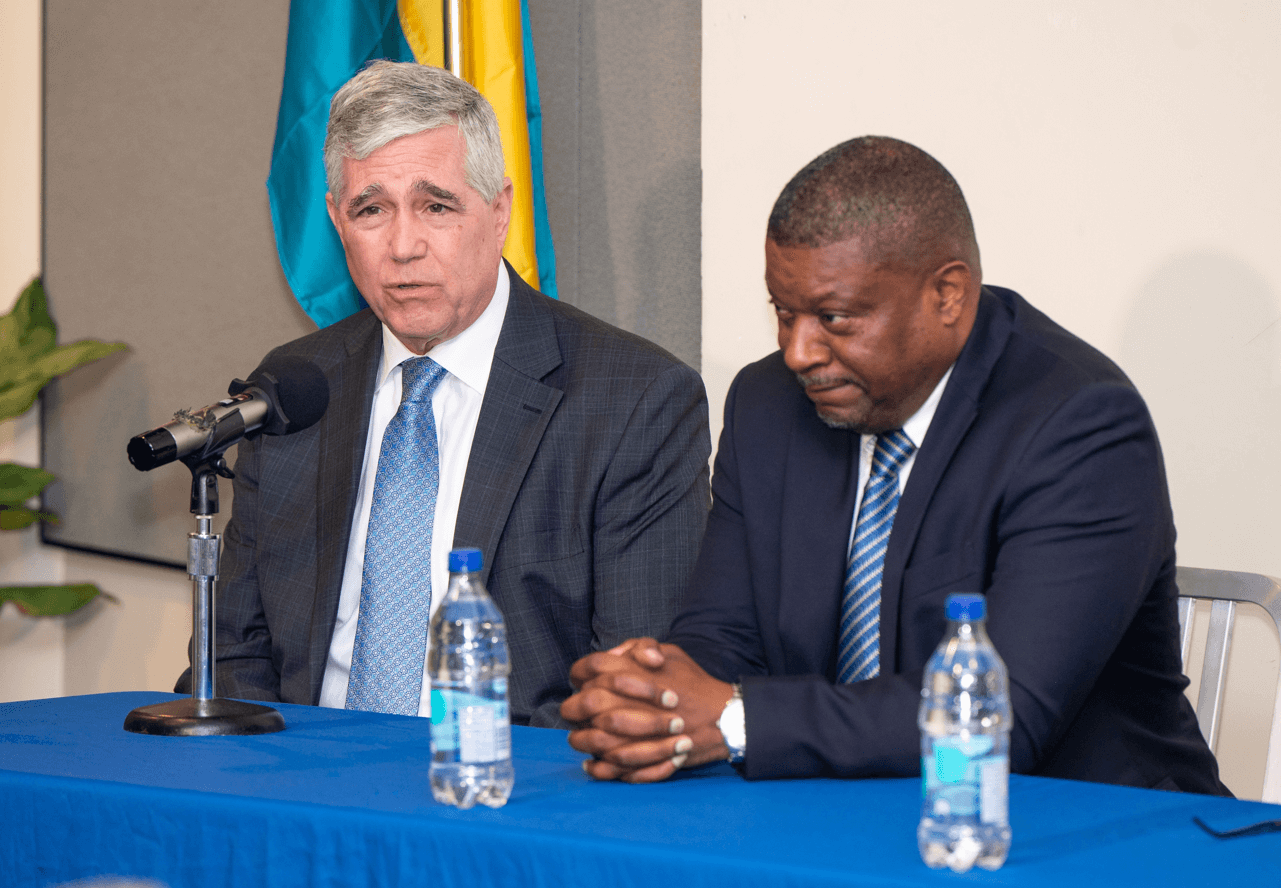
- Michael Drury, chief economist, McVean Trading, makes a key point about China’s economic rise at the Central Banking Summit held at University of The Bahamas.
-
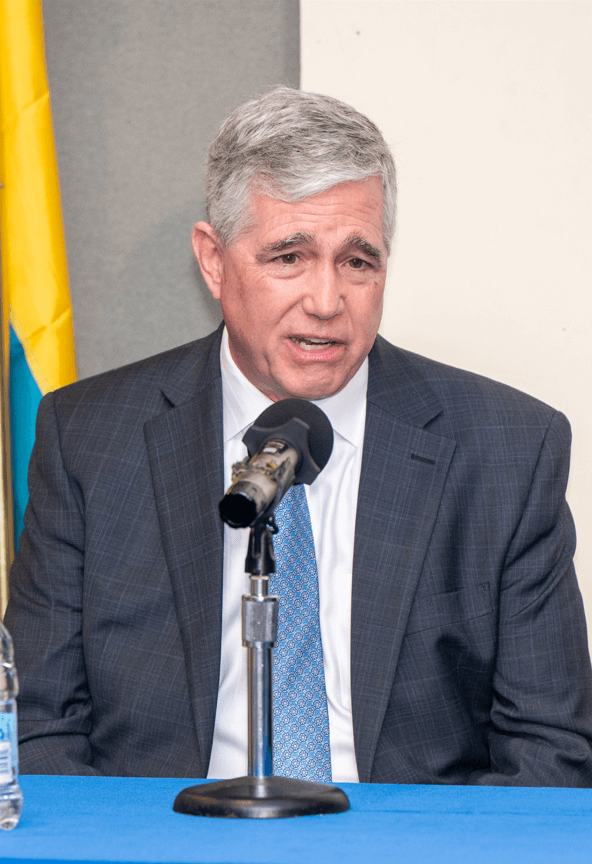
- Michael Drury, chief economist, McVean Trading, responds to a question from the audience at the Central Banking Summit hosted by UB and the Global Interdependence Center.
-
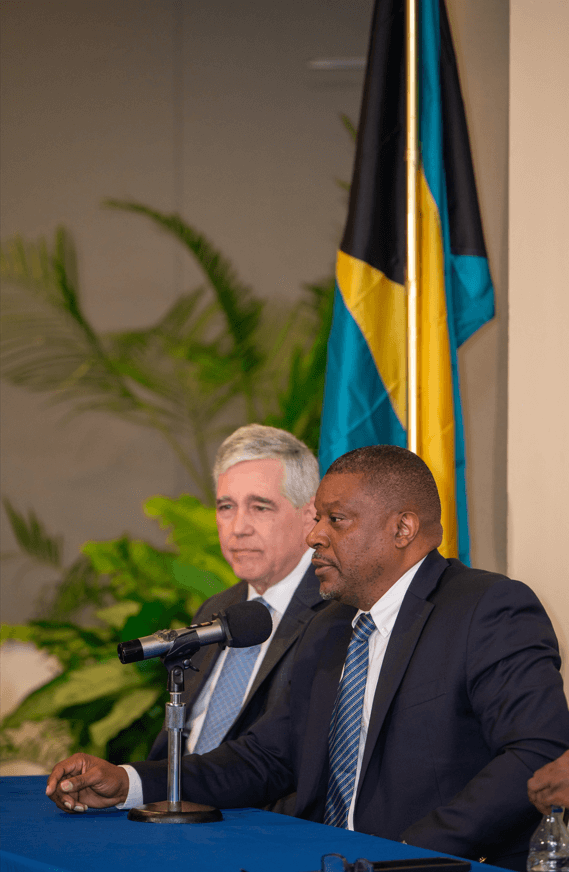
- Zhivargo Laing, executive director of the Government and Public Policy Institute at UB, makes a key point at the Central Banking Summit held at University of The Bahamas.