
FAQs
What is coronavirus?
Coronaviruses are a large family of viruses which may cause illness in animals or humans. In humans, several coronaviruses are known to cause respiratory infections ranging from the common cold to more severe diseases such as Middle East Respiratory Syndrome (MERS) and Severe Acute Respiratory Syndrome (SARS). The most recently discovered coronavirus has been named COVID-19.
What are the symptoms of COVID-19?
The most common symptoms of COVID-19 are fever, tiredness, and dry cough. Some patients may have aches and pains, nasal congestion, runny nose, sore throat or diarrhea. These symptoms are usually mild and begin gradually. Some people become infected but don’t develop any symptoms and don’t feel unwell. Most people (about 80%) recover from the disease without needing special treatment. Around 1 out of every 6 people who gets COVID-19 becomes seriously ill and develops difficulty breathing. Older people, and those with underlying medical problems like high blood pressure, heart problems or diabetes, are more likely to develop serious illness. Persons with fever, cough and difficulty breathing should seek medical attention.
How does COVID-19 spread?
People can catch COVID-19 from others who have the virus. The disease can spread from person to person through small droplets from the nose or mouth which are spread when a person with COVID-19 coughs or exhales. These droplets land on objects and surfaces around the person. Other people then catch COVID-19 by touching these objects or surfaces, then touching their eyes, nose or mouth. People can also catch COVID-19 if they breathe in droplets from a person with COVID-19 who coughs out or exhales droplets. This is why it is important to stay more than 1 meter (3 feet) away from a person who is sick.
What can I do to protect myself and prevent the spread of the disease?
Protection measures for everyone
You can reduce your risk of infection or spreading COVID-19 through these precautions:
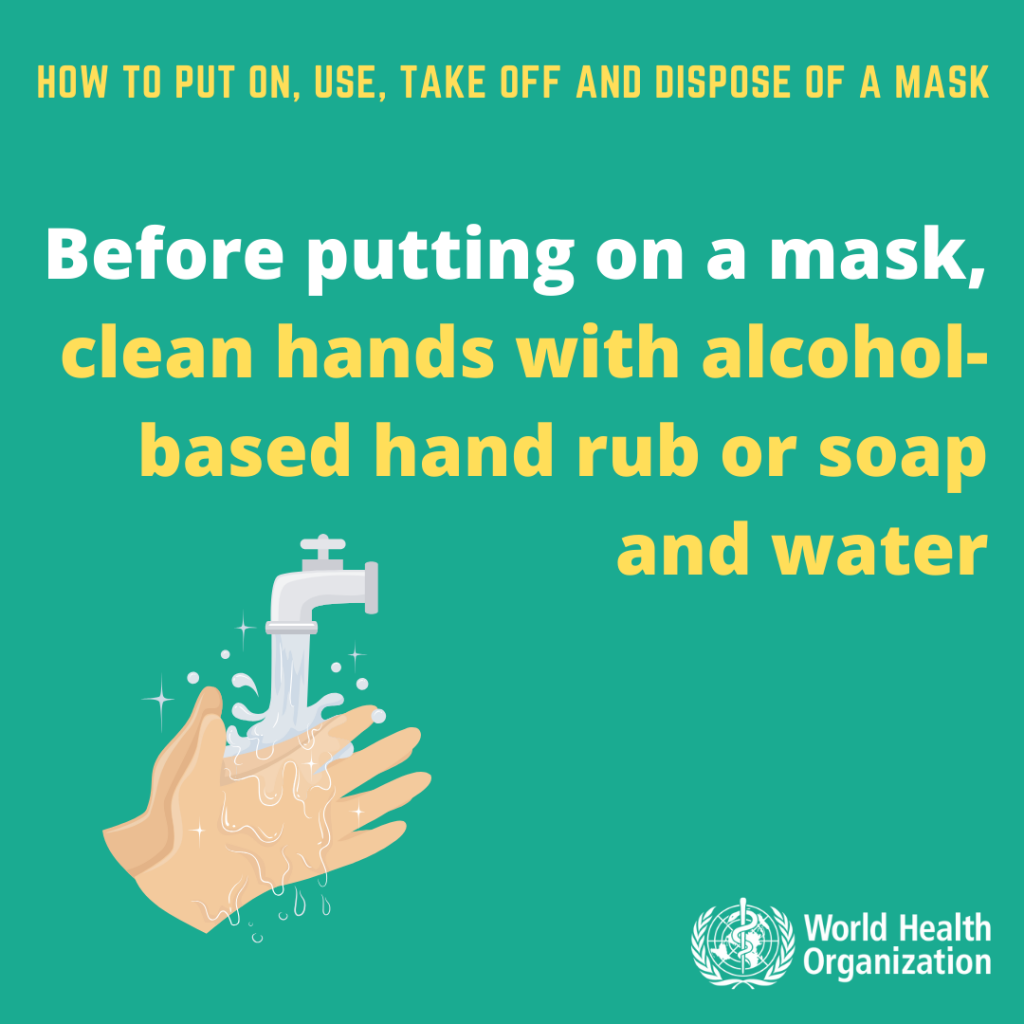
- Regularly and thoroughly clean your hands with an alcohol-based hand rub or wash them with soap and water.
- Maintain at least 1 metre (3 feet) distance between yourself and anyone who is coughing or sneezing.
- Avoid touching eyes, nose and mouth.
- Make sure you, and the people around you, follow good respiratory hygiene. This means covering your mouth and nose with your bent elbow or tissue when you cough or sneeze. Then dispose of the used tissue immediately.
- Stay home if you feel unwell. If you have a fever, cough and difficulty breathing, seek medical attention and call in advance. Follow the directions of your local health authority.
- Keep up to date on the latest COVID-19 hotspots (cities or local areas where COVID-19 is spreading widely). If possible, avoid traveling to places – especially if you are an older person or have diabetes, heart or lung disease.
Protection measures for persons who are in or have recently visited (past 14 days) areas where COVID-19 is spreading
- Follow the guidelines outlined above (Protection measures for everyone)
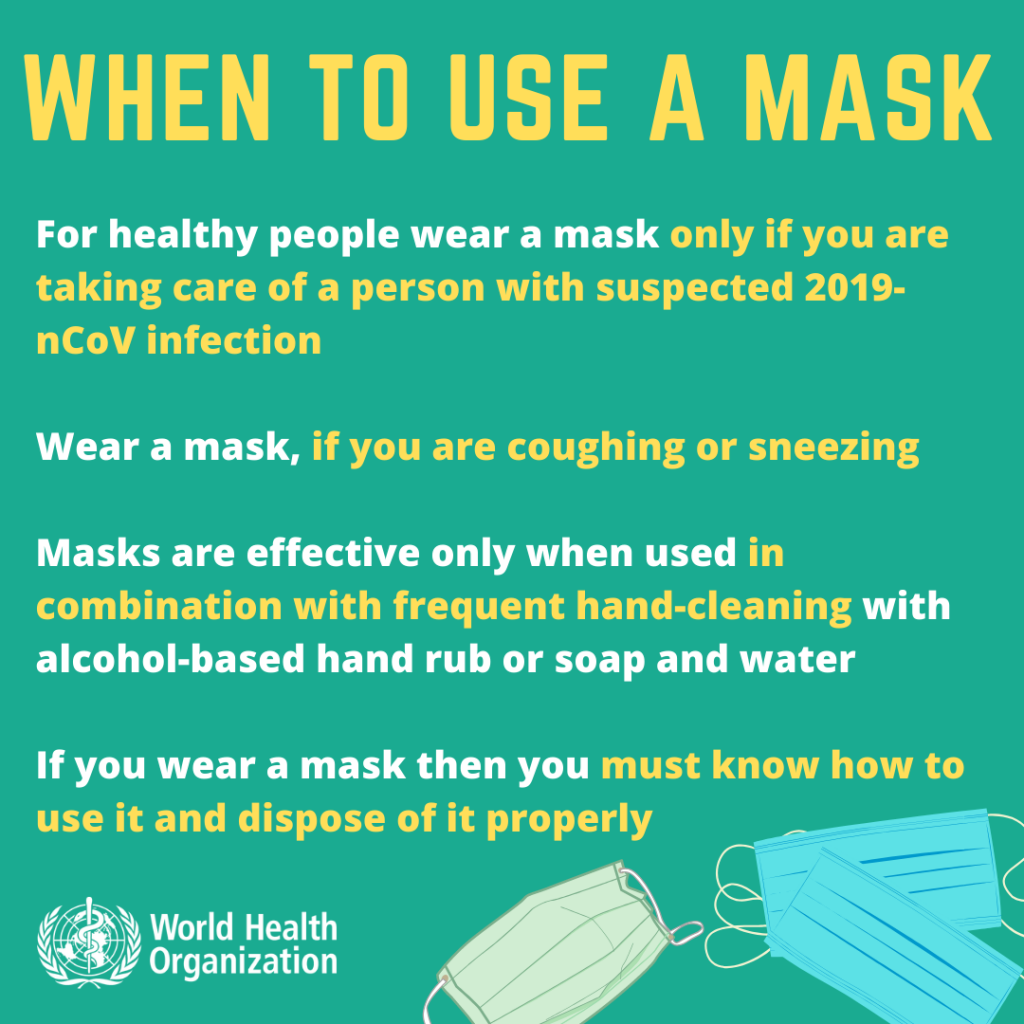
- Self-isolate by staying at home if you begin to feel unwell, even with mild symptoms such as headache, low grade fever (37.3 C or above) and slight runny nose, until you recover. If it is essential for you to have someone bring you supplies or to go out, e.g. to buy food, then wear a mask to avoid infecting other people.
- If you develop fever, cough and difficulty breathing, seek medical advice promptly as this may be due to a respiratory infection or other serious condition. Call in advance and tell your provider of any recent travel or contact with travelers.
Is there a vaccine, drug or treatment for COVID-19?
Not yet. To date, there is no vaccine and no specific antiviral medicine to prevent or treat COVID-2019. However, those affected should receive care to relieve symptoms. People with serious illness should be hospitalized. Most patients recover thanks to supportive care.
Possible vaccines and some specific drug treatments are under investigation. They are being tested through clinical trials. WHO is coordinating efforts to develop vaccines and medicines to prevent and treat COVID-19.
How long is the incubation period for COVID-19?
The “incubation period” means the time between catching the virus and beginning to have symptoms of the disease. Most estimates of the incubation period for COVID-19 range from 1-14 days, most commonly around five days. These estimates will be updated as more data become available.
How long does the virus survive on surfaces?
It is not certain how long the virus that causes COVID-19 survives on surfaces, but it seems to behave like other coronaviruses. Studies suggest that coronaviruses (including preliminary information on the COVID-19 virus) may persist on surfaces for a few hours or up to several days. This may vary under different conditions (e.g. type of surface, temperature or humidity of the environment).
If you think a surface may be infected, clean it with simple disinfectant to kill the virus and protect yourself and others. Clean your hands with an alcohol-based hand rub or wash them with soap and water. Avoid touching your eyes, mouth, or nose.
QUICK CONTACTS
511
COVID-19 health and general related matters. Have NIB number ready.
411
For non-health COVID-19 matters
911
For health emergencies and life threatening conditions
Ministry of Health COVID-19 Hotlines
376-9350 (8a.m. – 8p.m.)
376-9387 (8p.m.-8a.m.)
376-9357
UB Operator Contact
302-4300
UB-North Hotline
(242) 439 2029
COVID-19 Relief Fund

“You cannot predict all of the possible challenges but you have to be prepared that as soon as a challenge comes to light, you’re ready to act quickly to resolve those issues. As soon as we encounter an issue or a challenge we have a plan of action to put in place immediately. And that is what University of The Bahamas has been doing.”
– Rodney D. Smith, Ed.D. President & CEO
The Challenge
 In September 2019, Hurricane Dorian ripped through the University of The Bahamas-North campus in Grand Bahama, causing severe damage to the administrative block, classrooms, the residential facility and most of the technology. In 2020, the COVID-19 pandemic, has adversely affected more than 210 countries around the world, including The Bahamas. In accordance with the protocols of the Government of The Bahamas, The Bahamas Ministry of Health and University of The Bahamas effective Monday, 16th March 2020, all UB campuses, centres and business operations transitioned to remote operations. As a precaution, most of our students residing in university dorms were advised to return home; this included our Family Island students.
Like most universities across the globe, remote instruction and communications commenced using online applications. In an effort to ensure University seniors have the opportunity to complete final courses and graduate as scheduled this spring and for remaining students to progress through the semester, classes continued via online applications. However, we confront another challenge. While we have moved our courses online, some Family Island students do not have the necessary equipment needed to complete their assignments.
#UBCOVID-19 Relief Fund
 To date, approximately 4,600 students, 210 faculty and 438 staff are working remotely. Many are in need of technology and devices to efficiently deliver class content and fulfil daily work/class demands. Some Family Island students are challenged to keep up with the online course rigor due to the lack of laptops, tablets or stable Wi-Fi services at home. Meanwhile, some students in New Providence and Grand Bahama are in need of basic food items and hygiene supplies on a day-to-day basis. In response, the University established the #UBCOVID-19 Relief Fund for students, faculty and staff impacted by the COVID-19 pandemic.
Contributions to this fund will assist those in need with a special focus on Family Island students who, as a result of this crisis, have had to return home. Those students who are unable to leave dormitory facilities because of financial constraints will also benefit from your donation. As a University, we are mindful of the extraordinary pressure the country, including the business community, is facing. However, we are requesting your kind consideration of any cash or in-kind gift of laptops, cell phones, tablets, portable Wi Fi devices or other donations to the UBCares Pantry.
Ways to Give
Toggle content goes here, click edit button to change this text.