Small Island Sustainability (SIS) Institute
Research and Innovation
UB’s degree programme in Small Island Sustainability will equip students with the skills and competencies necessary to develop and administer small island sustainable strategies in both the public and private sectors. Our programme is designed to meet pressing national and international needs in sustainability, while training students with the skills to compete internationally and make a difference in The Bahamas and the wider world.
The Bachelor of Science in Marine Science and Sustainability provides students with a solid scientific foundation in Marine Science, while giving them a breadth of knowledge in sustainability and practical science skills. All students complete an internship or a research project as part of their degree, giving them valuable hands-on experience and connections to potential future employers.
Marine Science and Sustainability majors go on to pursue graduate degrees or gain employment in both the public and private sectors, working for government agencies, non-profit institutes, research organisations, conservation organisations, and environmental consultants.
The GTR Campbell Small Island Sustainability Research Complex, home of the SIS programme, embodies the University’s commitment to creating a generation of problem solvers, innovators, interdisciplinary communicators, collaborators, and agents of change.
BSc Marine Science and Sustainability
The Small Island Sustainability Bachelor of Science (B.Sc.) in Marine Science and Sustainability
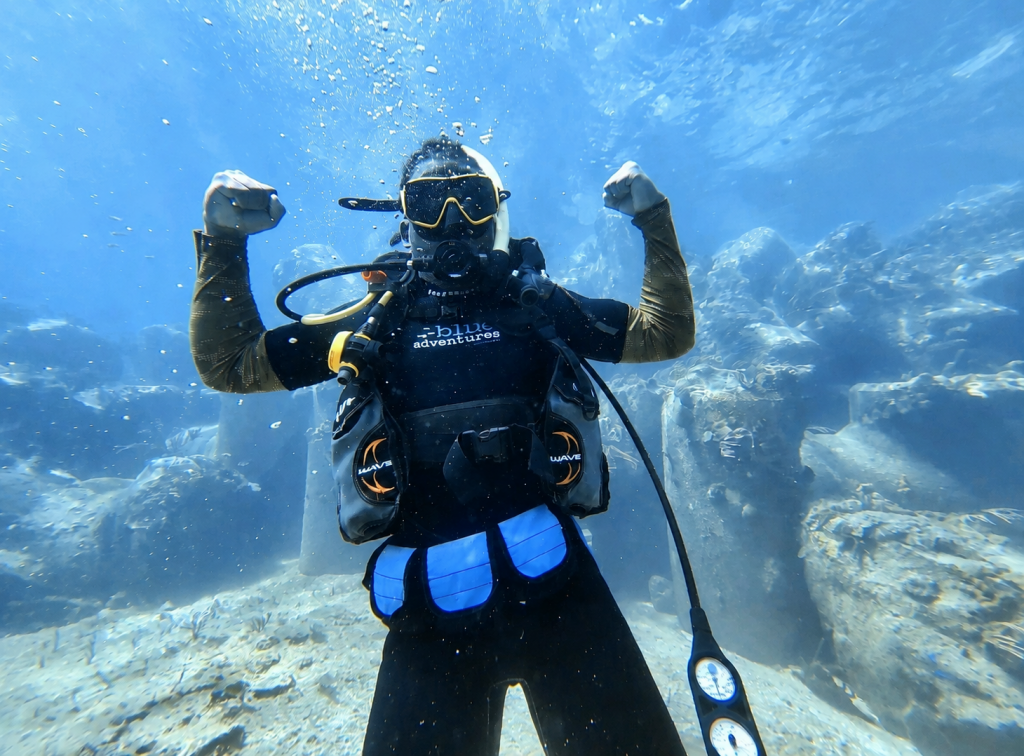
The Small Island Sustainability Bachelor of Science (B.Sc.) in Marine Science and Sustainability is interdisciplinary, service-focused, and inquiry-based. In this programme, students gain a firm foundation in STEM (Science, Technology, Engineering, and Mathematics), including courses in biology, chemistry, physics, and mathematics, while expanding their capacity to develop more sustainable practices for the marine environment in The Bahamas and globally. Beyond building their STEM and humanities background, students take a variety of courses in both Marine Science and Sustainability, including diverse courses as Oceanography, Marine Ecology, Research Methods, Environmental Policy, Marine and Coastal Zone Management, Coral Reefs, and Small Island Sustainability. This broad approach ensures that they have a comprehensive understanding of the marine environment and its specific sustainability challenges and opportunities here in The Bahamas.
As part of their degree programme, students participate in either an internship experience with an outside partner or a research project under the supervision of a faculty member. These internships or research studies allow students to integrate their classroom knowledge with hands-on work in their chosen field of study. These opportunities also allow students to connect with potential future employers while adding relevant experience to their resumes.
To give students flexibility to build a programme that fits their needs, the BSc in Marine Science and Sustainability offers a variety of major elective courses, which allow them to focus on areas of particular interest. Students are also empowered to gain a broader perspective by taking the opportunity to study abroad at a university of their choice outside of The Bahamas or complete a learning opportunity on another island within The Bahamas.
Bachelor Degree Programme Requirements (Major)
Total Programme Credit Hours: 130
Year I: FRESHMAN – Semester I
COUN 100 First Year Seminar (1 credit)
ENGL 119 Writing and Rhetoric I (3 credits)
GEN ED HMNS 100/200 (3 credits)
MATH 167 (Prescribed) Pre-Calculus II: Trigonometry (3 credits)
BIOL 101 Principles of Biology II (3 credits)
BILB 101 Principles of Biology Laboratory II (1 credit)
SIST 100 Introduction to Sustainability and Environmental Science (3 credits)
Year I: FRESHMAN – Semester II
GEN ED COMP LIT (1 credit)
ENGL 120 Writing and Rhetoric II (3 credits)
GEN ED PE/H/N (2 credits)
MATH 168 (Prescribed) Pre-Calculus II: Trigonometry (3 credits)
BIOL 102 Principles of Biology II (3 credits)
BILB 102 Principles of Biology Laboratory II (1 credit)
MARI 130 Oceanography (3 credits)
Year II: SOPHOMORE – Semester I
GEN ED FOR LANG I (3 credits)
BIOL 216 General Ecology (3 credits)
BILB 216 General Ecology Laboratory (1 credit)
CHEM 127 General Chemistry I (3 credits)
CHLB 127 General Chemistry I Laboratory (1 credit)
SIST 200 Small Island Economies and Sustainability (3 credits)
MATH 171 (Prescribed) Calculus I (3 credits)
Year II: SOPHOMORE – Semester II
GEN ED FOR LANG II (3 credits)
SOCI 111 or ANTH 101 Introduction to Sociology or Intro to Soc. and Cult. Anthropology (3 credits)
100/200 ELECTIVE (3 credits)
CHEM 227 General Chemistry II (3 credits)
CHLB 227 General Chemistry II Laboratory (1 credit)
MARI 231 Marine Biology (3 credits)
MARL 231 Marine Biology Laboratory (1 credit)
Year III: JUNIOR – Semester I
ENGL 300 Advanced Composition (3 credits)
SIST 302 Environmental Policy (3 credits)
BIOL 301 Biostatistics (3 credits)
SIST 310 Small Island Sustainability Seminar (3 credits)
PHYS 164 (Prescribed) General Physics I (4 credits)
Year III: JUNIOR – Semester II – STUDY ABROAD
ELECTIVE 300/400 (3 credits)
ELECTIVE 300/400 (3 credits)
SIST 305 Environmental Research Methods (3 credits)
SIST 392 or SIST 393 Sustainability Internship or Directed Sustainability Research (5 credits)
MAJOR ELECTIVE (3 credits)
Year IV: SENIOR – Semester I
MARI 308 or MARI 418 or MARI 425 Coral Reefs or Shark Biology and Conservation or Marine Mammals (3 credits)
SIST 498 Sustainability Research and Scientific Skills Seminar (3 credits)
MARI 325 Marine Ecology (3 credits)
MAJOR ELECTIVE 300/400 (3 credits)
MAJOR ELECTIVE 300/400 (3 credits)
Year IV: SENIOR – Semester II
300/400 ELECTIVE (3 credits)
MARI 405 Introduction to Marine and Coastal Zone Management (3 credits)
MAJOR ELECTIVE 300/400 (3 credits)
MAJOR ELECTIVE 300/400 (3 credits)
MAJOR ELECTIVE 300/400 (3 credits)
Research in SIS
GTR Campbell Small Island Sustainability Complex Research Projects
Faculty in the GTR Campbell Small Island Sustainability Complex engage in a variety of research projects related to current and pressing needs within The Bahamas and internationally. These projects are funded by a variety of sources, including charitable foundations, multilateral agencies, and international granting agencies, in addition to internal UB research funding through the Wilson Award.
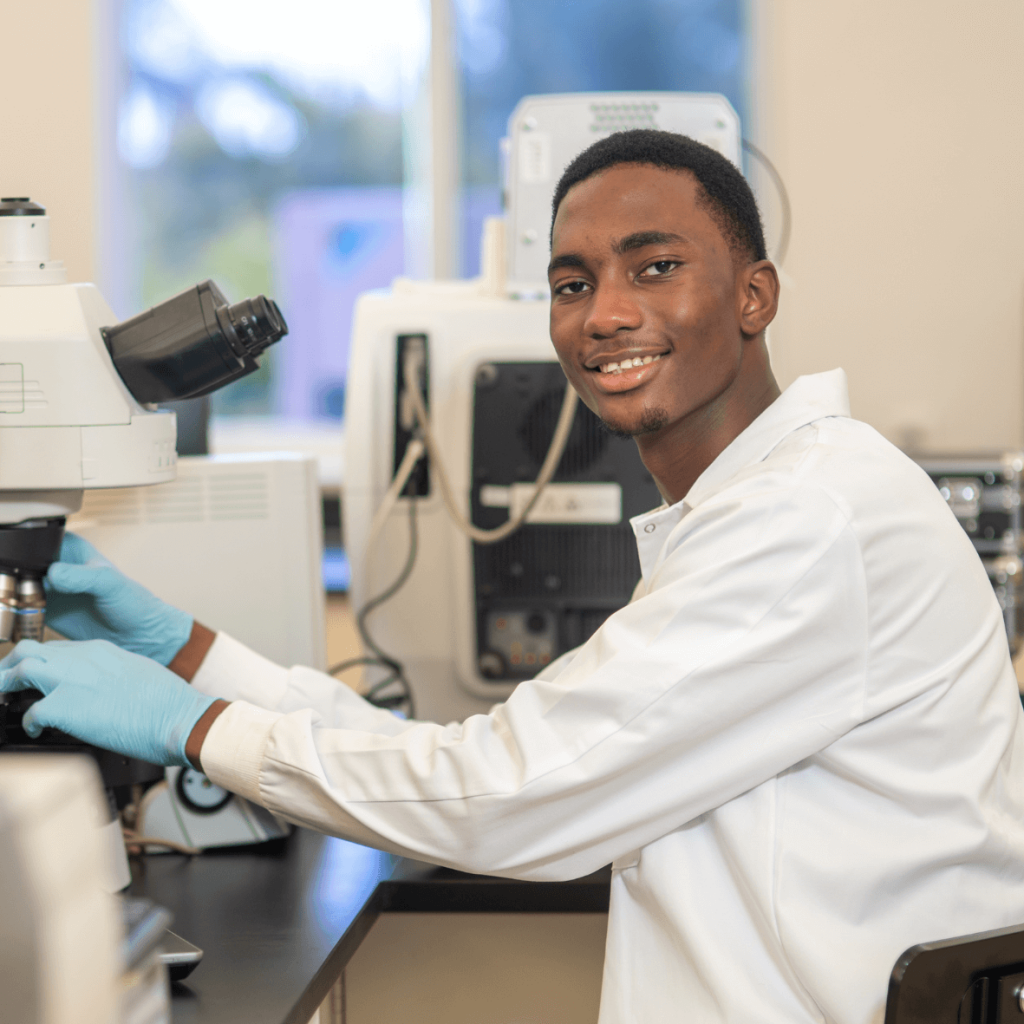
Research projects through SIS are designed to involve SIS students as research assistants to provide them with practical experience that will add to their resume when applying for jobs post-graduation. Students are exposed to current field, laboratory, and analysis techniques through learning instrumentation, sampling design, and data analysis. Current projects involve a variety of topics across the environmental and marine sciences and include such projects as:
- Capacity building to enhance management of threats to rock iguanas: The Caribbean is home to 11 species of rock iguanas (Cyclura), 10 of which are listed as threatened on theIUCN Red List. The Central Bahamian Rock Iguana (Cyclura rileyi) is an endangered species restricted to a few islands in The Bahamas and faces significant threats from invasive species, habitat loss, climate change, and human activities. This project is strengthening the draft Conservation Action Plan for this species by developing and implementing a standardised monitoring framework on San Salvador. Baseline data are being collected prior to management implementation to allow for evaluation of conservation effectiveness.
- The recovery of freshwater lenses and groundwater resources following extreme events:the SISRC has several ongoing projects related to the investigation of soil and freshwater resources in response to the impacts of extreme events, such as hurricanes, and overextraction of groundwater for human use. The limited freshwater lenses located across the Bahamian archipelago are significantly threatened by human use and climate change, with significant potential for salinization, reduced quantity, and poor water quality.
- Sources of nutrients and potential for eutrophication in terrestrial and coastal waters: Terrestrial water sources have high connectivity with coastal environments, resulting in land use impacts directly influencing the marine environment. SIS faculty researchers have several ongoing projects to monitor for eutrophication of the waters throughout The Bahamas. Faculty are investigating soil quality, water quality, and algae populations to identify possible land-based sources of eutrophication and the effects on coastal waters. These research projects provide a greater understanding of the physical and biogeochemical makeup of Bahamian inland and coastal waters. Results can guide current and future efforts at environmental monitoring and protection, alongside ensuring the ocean remains healthy for residents and visitors to The Bahamas.
- Seagrass Communities: Species interactions, reproductive ecology, and resilience to Invasives in The Bahamas.

SISRC Laboratories
GTR Campbell Small Island Sustainability Research Complex Laboratories
The GTR Campell Small Island Sustainability Research Complex (SISRC) houses four laboratories that support teaching and research in environmental science, marine science, soil science, chemistry, and molecular biology. The laboratories are managed by Mrs. Ruby Pinder-Neely.
Safe Lab 1 (Analytical Laboratory) contains advanced instrumentation used for chemical and environmental analysis, including an Atomic Absorption Analyzer (AAA), ICP-MS, GC-MS, and HPLC-MS systems, along with a UV-Visible Spectrophotometer and an FTIR for molecular characterization.
Safe Lab 2 (Wet Laboratory) is used for microbiology and aquatic research, including culturing microorganisms, water quality testing, and the study of freshwater and marine organisms. It also serves as a general laboratory space for preparing environmental samples such as water and soil prior to analysis in the Analytical Laboratory. The lab is equipped with an autoclave, drying oven, and other basic equipment used for sample preparation and sterilization.
The Molecular & Genetics Laboratory supports molecular biology and genetic research and is equipped with the Applied Biosystems SeqStudio Genetic Analyzer, QuantStudio Real-Time PCR System, ProFlex and Eppendorf Mastercycler X50 thermal cyclers, an Eppendorf 5810R refrigerated centrifuge, and a NanoDrop spectrophotometer. Dr. Tanya Simms conducts extensive research in this laboratory.
The Soil Laboratory supports soil nutrient testing, soil texture and quality analysis, and research related to agriculture and land use in The Bahamas. Dr. Williamson Gustave’s research also makes significant use of this laboratory.
Together, these laboratories support research related to sustainability and environmental systems in small island environments while also providing valuable hands-on training opportunities for students.

Dr. Kristen Welsh Unwala
Executive Director; Assistant Professor of Environmental Science

Dr. Mattias Johansson
Programme Coordinator, Assistant Professor, UB North

Dr. Solomon Amankwah
Assistant Professor, Oakes Field

Dr. Brandon Bethel
Assistant Professor, Oakes Field

Dr. Ancilleno Davis
Assistant Professor, UB North

Dr. Vallierre K. W. Deleveaux
Researcher II, Oakes Field

Dr. Trevor Johnson
Assistant Professor, Oakes Field

Dr. Kelly Kingon
Assistant Professor, UB North

Ruby Pinder-Neely
Laboratory Manager, Oakes Field

Tyranique Thurston
Lab Associate, Oakes Field